For thirteen years I billed by the hour. It is how most independent developers work, and it is how most of my clients expected to pay. When I started Praxline in early 2026, the first decision was to stop.
This note is about why, what replaced it, and the parts of fixed pricing that are harder than they look.
What an hourly bill actually pays for.
An hourly rate looks fair. You pay for the time the work takes, nothing more. The trouble is what it rewards. A developer who takes ten hours earns twice as much as one who takes five, for the same result. Nobody sets out to be slow, but the incentive points the wrong way, and over a long engagement incentives tend to win.
It also changes how clients behave. When every question costs money, people stop asking small ones. They save problems up, send one long email a month, and live with the broken form in the meantime. The meter makes the working relationship worse at exactly the point where it should be closest.
And it hides the real number. A quote of thirty to fifty hours is not a price. It is a range, and the risk of the top end sits with the client, the person least able to judge whether the extra hours were needed.
What we do instead.
Every engagement starts with a one-page brief that the client signs off: what we are building, in what order, and what it costs each month. If the problem cannot be written on one page, it is not ready to be built, and that is worth finding out before any money goes on code.
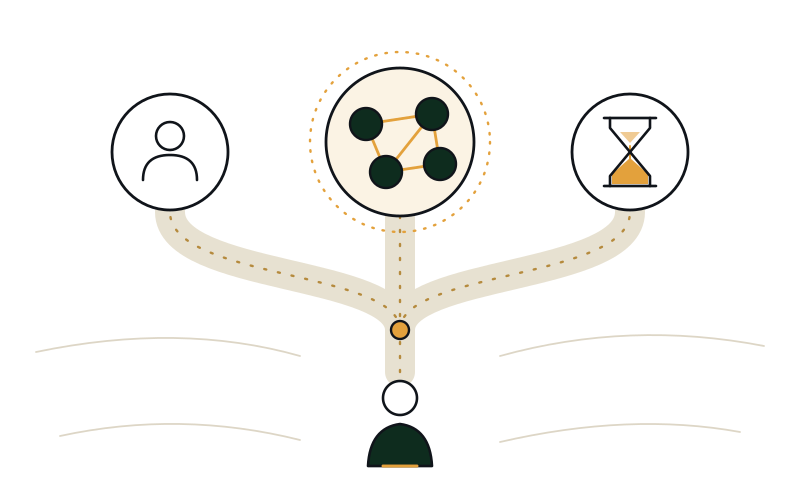
From there the work is scoped, priced and paced from day one. The price is fixed in writing. Anything outside the brief becomes a written change order with its own price, agreed before the work starts, so nothing new turns up on an invoice. If I underestimate the work, that is my cost, not the client's.
- Brief One page, signed off before any code.
- Fixed price In writing. Overruns are ours.
- Change order New ideas get their own written price.
Most of the work runs on a monthly retainer rather than a one-off project fee, because most of what a growing company needs is not one-off. A website needs keeping up to date, a connection between two systems needs watching, an internal tool needs changing when the business changes. Web Care starts at £195 a month, a custom build at £4,500, and every retainer runs on 30 days' notice either side.
The parts that are harder than they look.
Fixed pricing is not free. The price has to carry the risk that an hourly quote leaves with the client, so it can look higher than the optimistic end of an hourly estimate. The fair comparison is with the hourly bill you actually receive, not the one you were quoted.
It needs discipline on both sides. I have to scope carefully, because underestimating costs me. The client has to accept that a new idea halfway through is a change order, not a quiet addition. The conversation about what is in and what is out happens once, in writing, instead of every month on the invoice.
And some work cannot be scoped yet. When a founder cannot say what the software needs to do, a fixed price for the whole build would be a guess dressed up as a promise. The honest answer is to start smaller, with a piece of work small enough to price properly, and let what it teaches you write the brief for the rest.
Why AI makes this matter more.
AI has changed how quickly software gets built. With Claude in the loop on architecture, code, review and testing, builds that used to take an agency two months now ship in four to six weeks. On an hourly model, every hour saved is income lost, so the incentive is to keep quiet about the speed. On a fixed price, the saving comes back to the client as time and price, which is where it belongs.
If a supplier tells you they have got faster and you never see it in the bill or the timeline, it is fair to ask where the saving went.
Questions worth asking any supplier.
- What is the price for this scope? In writing, not as a range of hours.
- What happens if it takes longer than you thought? Who pays for the overrun.
- How are changes priced? And whether you find out before or after the work.
- What do I keep if we stop working together? Code, hosting and every account should be in your name from day one.
This is how Praxline works across all six service lines: fixed prices, written scope, and a promise on the site that if we ever break one, you can fire us. If you are paying by the hour now and want to see what a fixed price for the same work would look like, drop me a line, or see the services and prices.